Your brain is built to change.
Accelerated TMS protocols create the neurological conditions that treat Depression, Anxiety, OCD, Dementia, PTSD and trauma related symptoms. No six-week daily commute. No guesswork. Just a clear path forward.
Patients who understand their treatment do better. That’s why we teach before we treat.
Everything could change… tomorrow.
What is TMS Therapy?
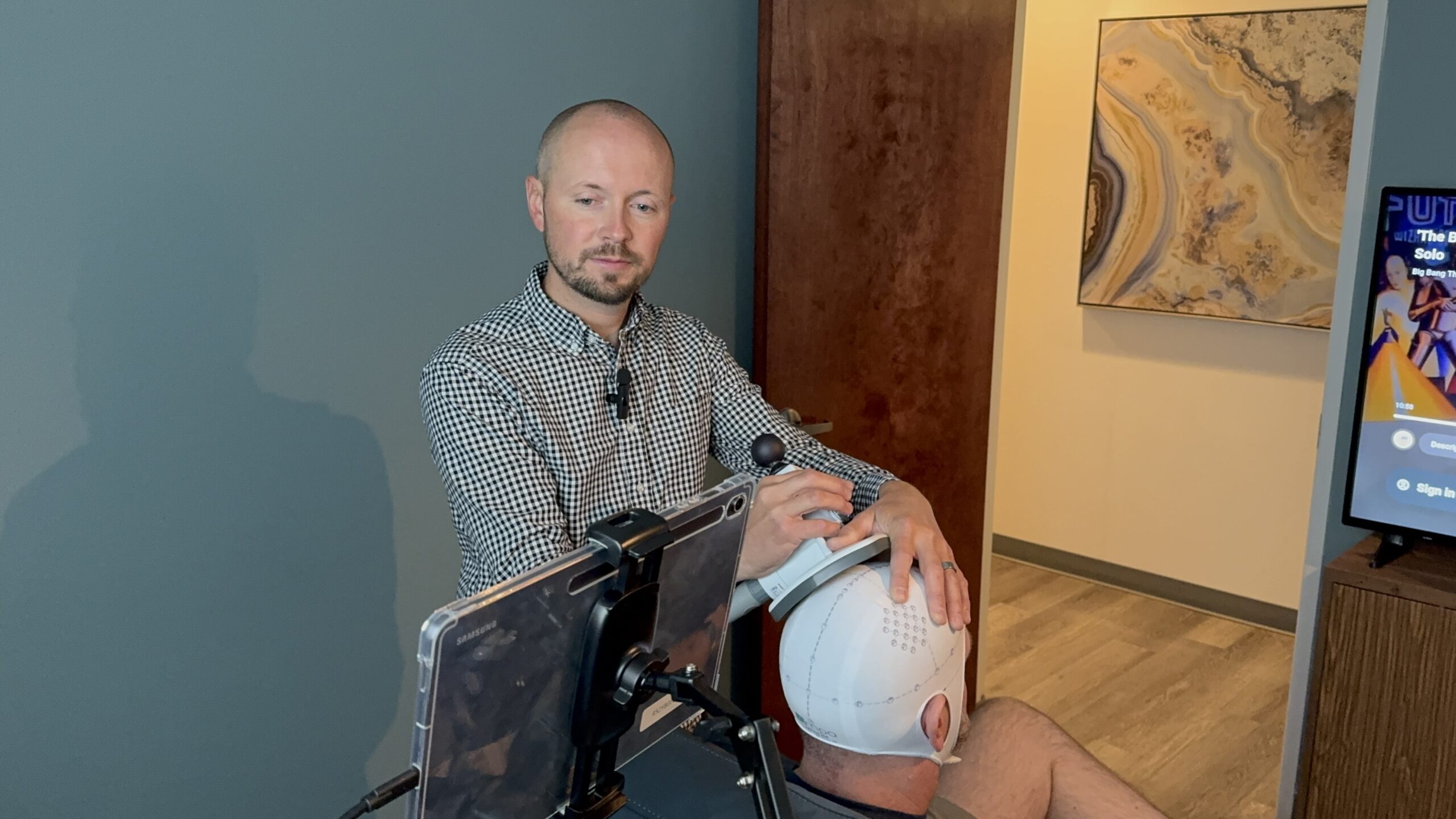
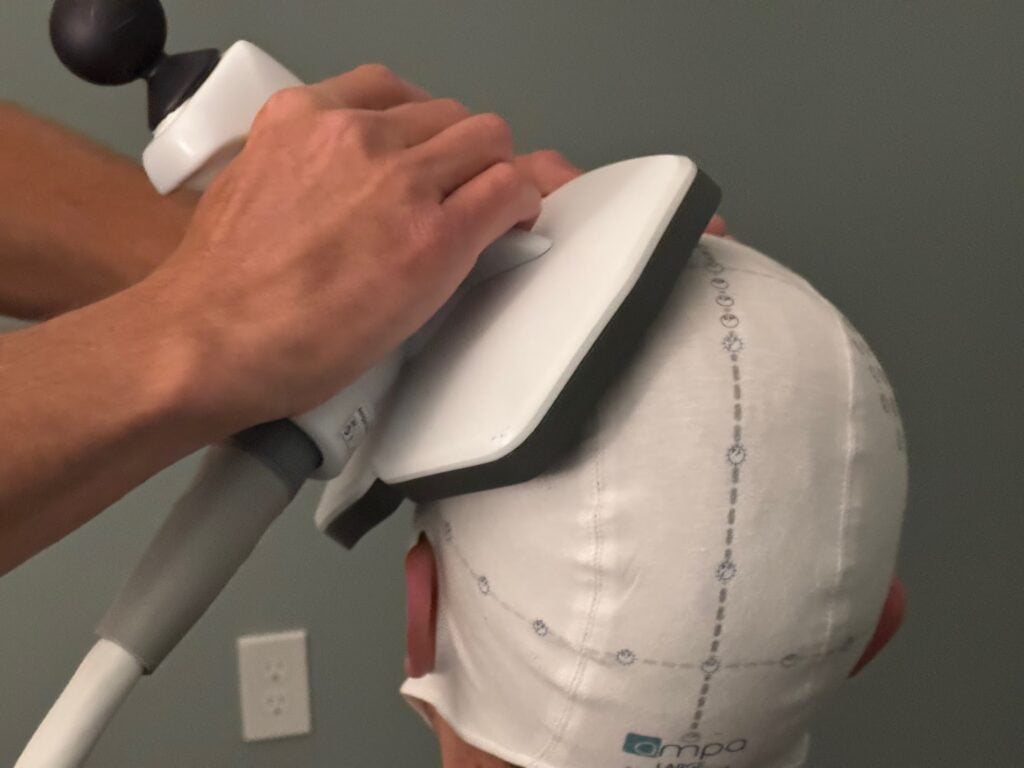
Transcranial Magnetic Stimulation (TMS) uses brief, focused magnetic pulses to stimulate the brain circuits involved in mood, motivation, and emotional regulation. It’s non-invasive, requires no sedation, and you can drive yourself home afterward. The real mechanism isn’t the magnet. It’s neuroplasticity, your brain’s natural capacity to rewire itself. TMS creates the conditions for that rewiring to happen and alongside current therapies has helped thousands create lasting change.
We treat the conditions that don't respond to the usual answers.

Depression (MDD)
When medication and therapy haven't been enough, TMS offers a different mechanism entirely... one that works at the level of specific brain circuits, not just system-wide antidepressants.

OCD
Our specialized deep-TMS hardware targets the networks driving intrusive thoughts and compulsive behavior offering relief that medication can't usually reach by itself.
Anxiety
Emerging clinical evidence supports TMS as a non-medication option for generalized and social anxiety, particularly for patients who haven't found relief through conventional treatment.
PTSD
TMS protocols targeting specific brain regions can reduce hyper-arousal, intrusive symptoms, and the emotional weight of traumatic memory. No medication required.

We treat the conditions that don't respond to the usual answers.
One-Day Treatment
Modeled after: ONE-D Study (Vaugn et al., 2025)
- 20 sessions in a single day
- D-cycloserine neuroplasticity enhancement
- No daily commute
- In-house payment plans available
Five-Day Treatment
$9,995 · Cash-pay · In-house Payment Plans Available
Modeled after: Stanford SAINT Protocol (Cole et al., 2022)
- 50 sessions over 5 days
- Published 78.6% Remission Rate (JAMA Psychiatry 2022)
- In-house payment plans available
- Travel coordination available
Disclaimer: Unlike the original SAINT study, which used functional MRI (fMRI) to guide coil placement, this clinic uses standardized clinical measurements and landmarks to determine the treatment site. This is a common and effective method used in most clinical TMS settings. Optimal TMS is not affiliated with Stanford University and does not claim to offer the trademarked SAINT TMS protocol
Six-Week Standard TMS
- Most insurance plans accepted
- 36 Sessions · 5 Days/weeks
- ~6 week total
Note: A “covered” TMS course at a typical $60 specialist copay = $2,160 out of pocket minimum, potentially more, if deductibles aren’t met. Our accelerated options are often more affordable in total, and dramatically faster for long term resutls.
A different kind of TMS clinic.
Patient education is medicine
Research shows that educated patients. achieve measurably better treatment outcomes. We invest heavily in your understanding before, during, and after treatment.
Accelerated protocols
Cash-pay simplicity, insurance flexibility
Patient-first providers.
Research-first approach.
Growing to serve patients nationally.
OPEN NOW
Las Vegas, NV
8981 W Sahara Ave,
Suite 270
Las Vegas, NV 89117
(725) 344-3322
OPEN NOW
OPENING SOON
Additional locations in development. Accelerated protocols available to traveling patients now.
Note for traveling patients: Our 1-day and 5-day protocols make it practical to travel for treatment. Visit your preferred location page for nearby hotel recommendations and travel tips.
How Is Optimal TMS Different?
- Personalized treatment protocols based on your specific symptoms
- Cutting-edge accelerated protocols for less downtime
- Continuous symptom monitoring and protocol adjustment
- Integration with therapy and lifestyle optimization
- FDA-Cleared and evidence based
The research, explained for real people.
Can TMS help with dementia? The latest research in 2026
TMS is being studied for Alzheimer’s and mild cognitive impairment, with some encouraging results. An honest look at the brain targets, the treatment schedules, why age changes the dose, and what TMS can and cannot do. Estimated read time: about 11 minutes.
What is D-cycloserine and why do we use it in our One-Day Intensive?
What is D-cycloserine and why do we use it in our One-Day Intensive? If you’ve read about our One-Day Intensive, you’ve seen D-cycloserine (TMS 1-Day treatment suppliment) mentioned as part of the protocol. Most patients have never heard of it. The name sounds clinical. It sounds like a medication and the question of whether you’re being given an additional psychiatric drug during an already unfamiliar procedure is a reasonable thing to want answered clearly. Here’s the clear answer: D-cycloserine is not a psychiatric drug. It doesn’t alter your mood, your perception, or your cognition in any meaningful way at the
The THREE-D Trial – iTBS Non-Inferior to Standard rTMS for Depression (Blumberger et al. 2018)
The THREE-D Trial – iTBS Non-Inferior to Standard rTMS for Depression (Blumberger et al. 2018) What this study was Who was studied What the protocol involved What the results showed What it means and what it doesn’t Why this study matters for patients What this study was The THREE-D trial is the largest randomized controlled trial comparing intermittent theta burst stimulation to standard high-frequency rTMS for major depressive disorder. It was a non-inferiority trial, meaning its primary question was not whether iTBS was better than rTMS, but whether it was at least as good. It was conducted across multiple Canadian
Common TMS Questions
- What does TMS feel like?
Most patients describe a tapping sensation on the scalp during pulses. There’s no pain, and no sedation. You remain fully alert. Some people feel a mild headache or tapping sensation after early sessions, which typically resolves quickly. By week two, most patients report no discomfort at all.
- I've had symptoms for years. Can TMS still help?
- Are the results permanent?
TMS creates lasting changes in brain connectivity, but like any treatment, ongoing maintenance may be needed. Most patients maintain significant improvements for long periods of time. If symptoms begin returning, brief “maintenance” courses are highly effective. Think of it like physical therapy—the gains are real, and occasional tune-ups help maintain them.
- How is this different from ECT (electroshock therapy)?
- What if I'm currently on medication?
- Is TMS safe? What are the side effects?