TMS for Anxiety
The evidence is still building for TMS’s efficacy in treating anxiety. Here’s what we know:
We want to be upfront: TMS does not currently have a standalone FDA clearance specifically for generalized anxiety disorder. That matters, and you deserve to know it.
What does exist is a meaningful and growing body of clinical evidence. Data from studies on other conditions shows in patients with major depressive disorder, anxious depression, and PTSD, TMS can produce significant reductions in anxiety symptoms. Many patients who come to us primarily for depression or PTSD report anxiety relief as a prominent part of their outcome.
We treat anxiety because the evidence supports it as a reasonable clinical option for the right patient. As with any medical treatment, we cannot guarantee results.
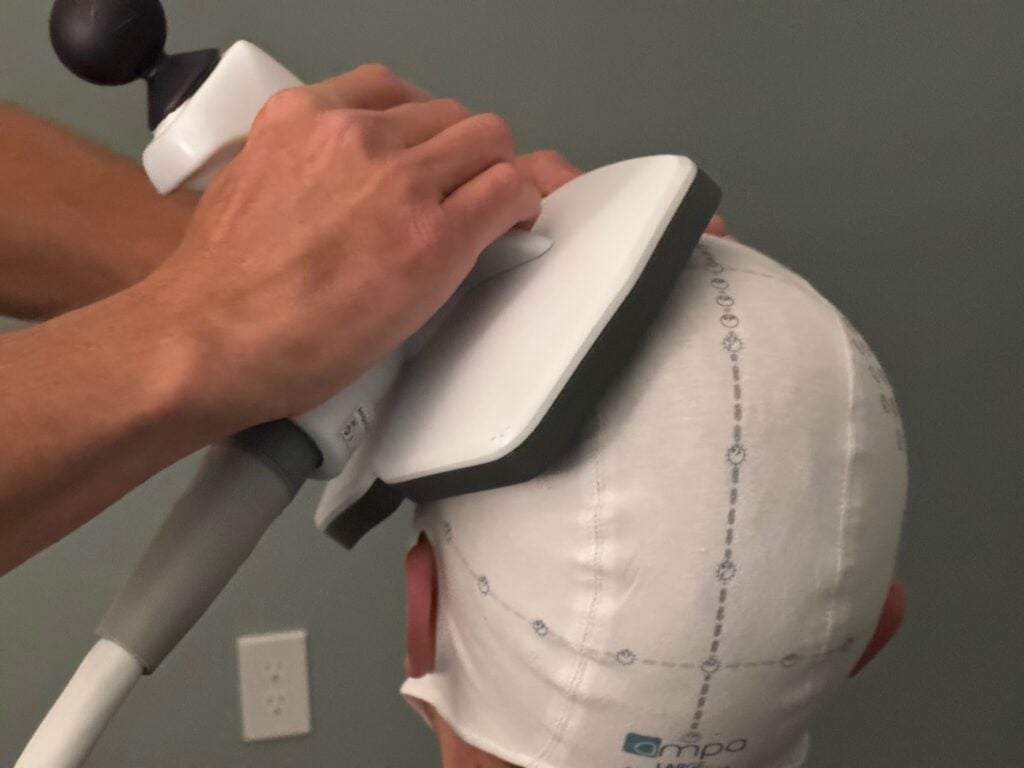
TMS applied to the right dorsolateral prefrontal cortex (using a specialized protocol known as cTBS) has been studied specifically for anxiety reduction. The working theory: downregulating an overactive right DLPFC can reduce the hypervigilance and rumination patterns that characterize anxiety disorders.
Results in published trials are promising particularly for generalized anxiety and social anxiety in patients who haven’t responded to first-line treatments.
TMS for anxiety is worth considering if you:
Have generalized anxiety disorder or social anxiety that hasn’t responded adequately to medication or therapy
Are experiencing anxiety as a significant comorbid feature of depression or PTSD
Want a non-medication option or have already tried first-line treatments
Are in CBT or another evidence-based therapy and want to enhance your outcomes
Treatment that fits your life – not the other way around.
Most TMS clinics offer one option: six weeks of daily visits. We offer something different.
One-Day Treatment
Modeled after: ONE-D Study (Vaughn et al., 2025)
A complete TMS course in a single clinic visit. This comprehensive single day treatment includes 20 brief TMS sessions over approximately 9.5 hours, enhanced with D-cycloserine to amplify neuroplasticity throughout the day. The University of Toronto’s study on this protocol shows an 87.5% response rate and 71.9% remission at six weeks.
- 20 sessions in a single day
- D-cycloserine neuroplasticity enhancement
- No daily commute
- In-house payment plans available
Five-Day Treatment
$9,995 · Cash-pay · In-house Payment Plans Available
Modeled after: Stanford SAINT Protocol (Cole et al., 2022)
Ten iTBS sessions a day for five consecutive days: this is the protocol behind some of the most compelling remission data in TMS research. Stanford’s published trial of this protocol shows a 78.6% remission rate by day five, with a mean time to remission of just 2.6 days. For patients who have spent years searching for relief, those numbers are remarkable.
- 50 sessions over 5 days
- Published 78.6% Remission Rate (American Journal of Psychiatry 2022)
- In-house payment plans available
- Travel coordination available
Disclaimer: Unlike the original SAINT study, which used functional MRI (fMRI) to guide coil placement, Optimal TMS uses standardized clinical measurements and landmarks to determine the treatment site. This is a common and effective method used in most clinical TMS settings. Optimal TMS is not affiliated with Stanford University and does not claim to offer the trademarked SAINT TMS protocol
Six-Week Standard TMS
- Most insurance plans accepted
- 36 Sessions · 5 Days/weeks
- ~6 week total
Note: A “covered” TMS course at a typical $60 specialist copay = $2,160 out of pocket minimum, potentially more, if deductibles aren’t met. Our accelerated options are often more affordable in total, and dramatically faster for long term results.
Benefits of TMS Therapy
Patients exploring TMS therapy in Las Vegas are typically looking for measurable changes in how they feel and function day to day, including:
√ Improved mood and emotional stability
√ Increased energy and motivation
√ Reduced overthinking and mental noise
√ Better focus and cognitive clarity
√ Decreased stress reactivity
√ More consistent sleep and recovery
These outcomes are connected to how brain activity patterns shift over time.
What to Expect
Response for anxiety follows a similar gradual trajectory to other TMS indications. Some patients notice reduced baseline tension and improved sleep within the first two weeks. Others see more pronounced change at the four to six week mark.
Managing expectations is part of good care. We’ll be honest with you about what TMS can and can’t do for anxiety specifically and we’ll tell you if we think a different intervention should come first.
Ready to learn if TMS is right for you?
A brief conversation is all it takes. No pressure, no commitment – just clarity.